
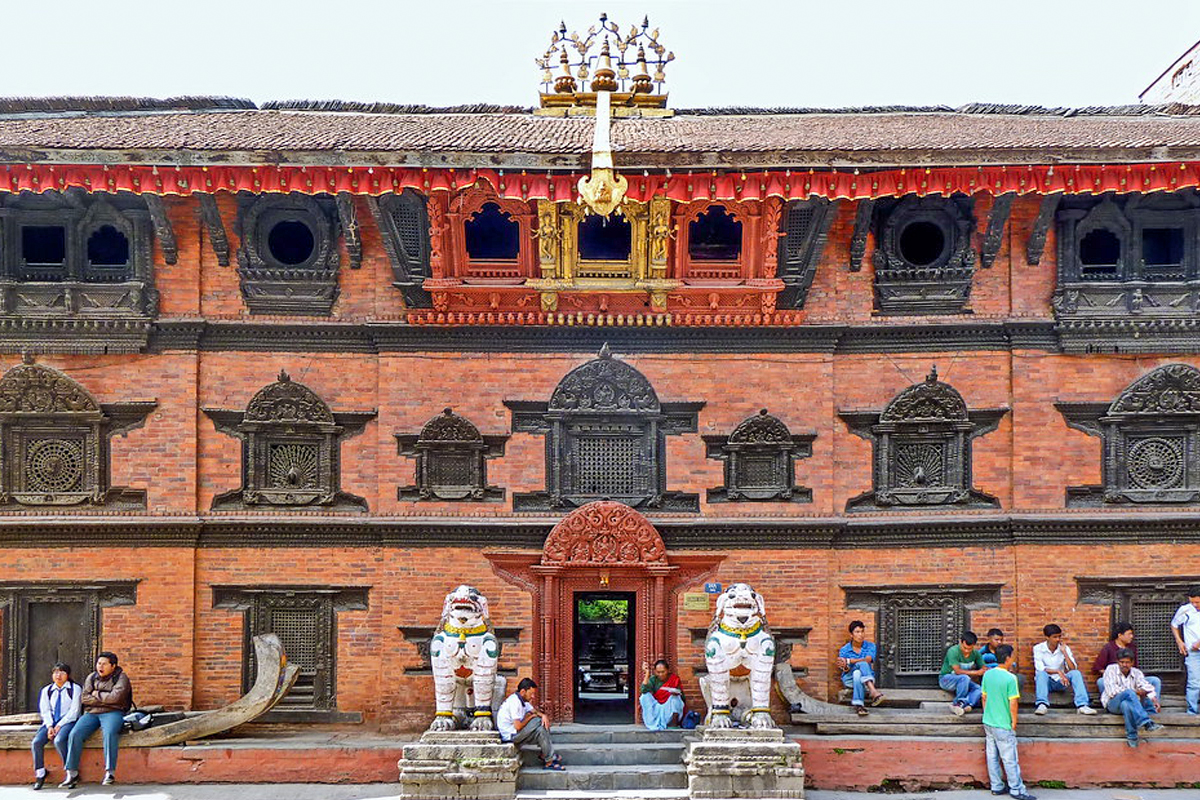
Kumari Ghar, Basantapur: Home of Nepal’s Living Goddess
In the very center of Kathmandu Durbar Square, inside the cultural maze of Basantapur, stands a building that is not simply visited — it is approached with quiet respect. Kumari Ghar is the residence of Nepal’s Living Goddess, a tradition that has continued for centuries without becoming a relic of the past.
Many historic palaces tell stories of former kings. This one tells the story of a goddess who is still present.
If Nepal’s spiritual heritage had a physical address, it would be here.
What Is Kumari Ghar?
Kumari Ghar is a 17th-century palace built during the Malla period specifically to house the Royal Kumari. Unlike temples where deities are represented by idols or symbols, this tradition centers on a living child believed to embody divine feminine energy.
She is not a symbolic figure. She is worshipped as a deity.
And this building is her home.
Architecture: Sacred Design, Not Ornament
The structure reflects classical Newari architectural excellence, where artistry and spirituality are inseparable.
Intricately carved wooden windows featuring protective and mythological motifs
A red-brick façade consistent with Kathmandu Valley heritage buildings
A peaceful inner courtyard used for religious rituals and controlled public visits
The well-known Kumari Window, where the goddess may appear briefly
The carvings represent guardians, cosmic harmony, and spiritual protection. In traditional belief, architecture is not neutral — it shapes energy. Kumari Ghar is built to maintain sacred balance, not to serve aesthetics alone.
Who Is the Living Kumari?
The Kumari is chosen from the Newar Shakya community of the Kathmandu Valley through a traditional selection process involving priests, astrologers, and elders. The criteria include specific physical traits, composure, and astrological compatibility.
Once selected:
She leaves her family residence
She lives under religious supervision in Kumari Ghar
She appears during major festivals and state occasions
She offers blessings to devotees and national figures
Her tenure ends at puberty, when the divine presence is believed to depart, and another girl is chosen. The cycle has continued across dynasties, political systems, and generations.
Daily Life Within the Palace
Life inside Kumari Ghar is structured and ritual-centered. The Kumari’s daily routine involves religious observances, limited social interaction, and preparation for ceremonial appearances. Caretakers and priests ensure adherence to traditional practices that preserve ritual purity.
While visitors see stillness, an entire spiritual routine unfolds inside the palace walls.
Kumari Ghar During Festivals
During major cultural and religious festivals, the palace becomes a focal point of devotion. The most anticipated moment is when the Kumari appears at her window. The crowd below becomes silent, hands folded, eyes lifted.
This is not spectacle. It is darshan — a sacred encounter with the divine.
In that brief moment, history, belief, and living tradition converge.
Cultural Importance
Kumari Ghar represents several unique cultural realities:
A pre-modern belief system actively practiced
A shared spiritual tradition bridging Hindu and Buddhist communities
A rare tradition centered on feminine divinity
A cultural identity anchor for Kathmandu
While many traditions have shifted into performance or preservation mode, this one remains lived and spiritually active.
Visiting Kumari Ghar
Visitors to Basantapur can enter the courtyard of Kumari Ghar, but the environment demands respect.
Dress modestly
Maintain silence
Photography of the Kumari is not permitted
Appearances are unpredictable and rare
Even without seeing her, the atmosphere itself communicates the sanctity of the place.
Why Kumari Ghar Matters Today
Kathmandu is evolving rapidly, yet Kumari Ghar continues its original purpose unchanged. It stands as proof that tradition can survive modernization without losing meaning.
It reminds us that culture is not only something recorded in history books. Sometimes, it is still living, present, and quietly observing the world from behind a carved wooden window.