
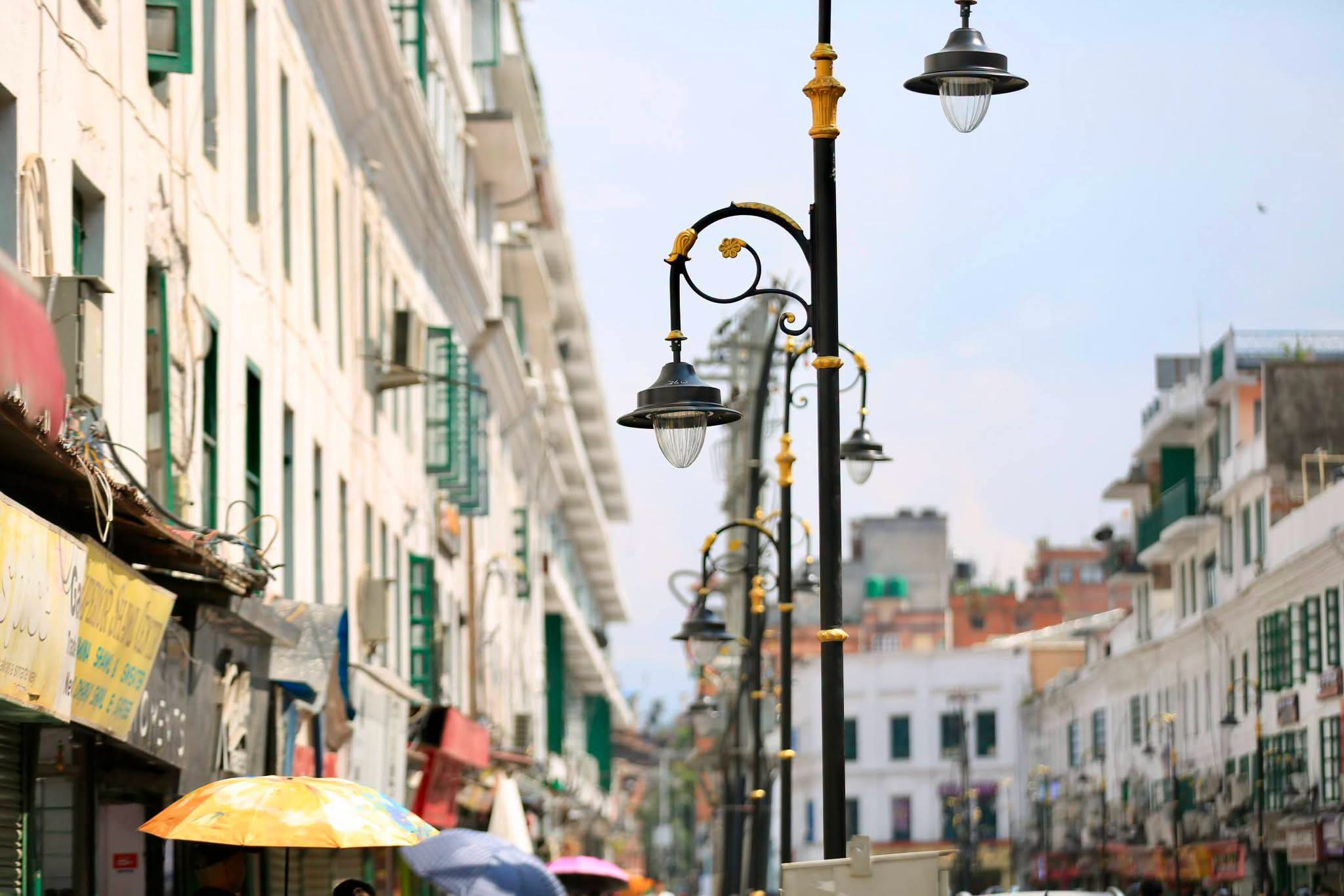
Traditional Street Lights Illuminate Kathmandu's Historic New Road: A New Chapter for an Iconic Heritage District
Kathmandu's historic New Road has entered a new era with the installation of elegant traditional-style street lights that beautifully combine modern public infrastructure with Nepal's rich architectural heritage. The initiative, led by Kathmandu Metropolitan City (KMC), is transforming one of the capital's busiest commercial corridors into a more attractive, pedestrian-friendly, and culturally authentic destination.
Installed along the historic Shukrapath corridor between Indrachowk and Bishal Bazaar, these decorative street lamps do far more than illuminate the streets after sunset. They represent Kathmandu's growing commitment to preserving its cultural identity while improving the everyday experience for residents, businesses, and visitors.
For anyone walking from Basantapur Durbar Square toward New Road in the evening, the difference is immediately noticeable. The warm glow of the heritage-inspired lighting complements the surrounding architecture, creating an atmosphere that feels timeless rather than purely modern.
A Brief History of New Road
New Road, officially known as Juddha Sadak, was constructed during the Rana era following the devastating 1934 Nepal-Bihar earthquake. It was designed as Kathmandu's first modern commercial avenue and quickly became the city's primary shopping and business district.
Over the decades, New Road has evolved into one of Nepal's most recognizable marketplaces, attracting thousands of shoppers every day. From traditional jewelry and textiles to electronics, books, and household goods, the area remains an economic hub for Kathmandu.
Its strategic location also makes it one of the main pedestrian routes connecting:
Basantapur Durbar Square
Indra Chowk
Ason Bazaar
Bishal Bazaar
Ratna Park
Kathmandu's historic inner city
Because of this cultural and commercial importance, preserving the district's visual identity has become increasingly important as Kathmandu continues to modernize.
Why Traditional Street Lights?
Modern LED street lights certainly improve visibility, but they often lack the architectural character needed in heritage districts.
Recognizing this, Kathmandu Metropolitan City opted for custom-designed traditional lamp posts inspired by the historic aesthetics of Kathmandu Valley. Rather than dominating the streetscape, the lighting blends harmoniously with nearby temples, old shop houses, traditional brick facades, and public spaces.
The design philosophy is simple:
Modern technology should support heritage—not replace it.
This approach is increasingly common in historic cities around the world, where public infrastructure is carefully designed to complement centuries-old architecture instead of competing with it.
Project Location
The heritage lighting project covers the Shukrapath corridor extending from:
Indrachowk
New Road
Bishal Bazaar
This stretch is one of the busiest pedestrian and commercial areas in Nepal, serving thousands of locals and tourists every day.
Its close proximity to Basantapur Durbar Square makes it one of the first places many visitors experience when exploring Kathmandu's UNESCO World Heritage area.
Key Objectives of the Project
The installation of traditional street lights supports several long-term goals.
1. Preserve Kathmandu's Historic Identity
New Road has always been more than just a marketplace. It is part of Kathmandu's living heritage. The project helps reinforce the district's unique identity by using infrastructure that reflects its historical significance.
2. Improve Nighttime Safety
Better illumination increases visibility for pedestrians, cyclists, shop owners, and emergency responders while making evening walks more comfortable and secure.
3. Enhance Tourism
Visitors increasingly seek authentic cultural experiences. A visually appealing streetscape encourages tourists to spend more time exploring New Road and nearby heritage sites.
4. Beautify Public Spaces
Traditional street lights contribute to a cleaner, more organized, and aesthetically pleasing urban environment, encouraging people to enjoy public spaces after dark.
5. Support Local Businesses
A well-lit commercial district naturally attracts more evening visitors, benefiting shops, restaurants, cafés, and street vendors throughout the area.
Design Features
The newly installed street lights have several distinctive characteristics:
Heritage-inspired lamp post design
Decorative ornamental poles
Warm LED illumination
Pedestrian-friendly lighting distribution
Energy-efficient technology
Durable construction suitable for Kathmandu's weather conditions
A design that complements nearby heritage buildings rather than overwhelming them
Unlike standard highway lighting, these fixtures prioritize ambiance alongside functionality.
Benefits for Visitors
For tourists visiting Kathmandu, the improvements offer several advantages.
Better Evening Photography
The warm lighting enhances the beauty of New Road's historic streets, making it an ideal location for nighttime photography.
Comfortable Night Walks
Visitors can now enjoy leisurely evening strolls between Basantapur, Indrachowk, and New Road with improved visibility and a more welcoming atmosphere.
Richer Cultural Experience
The traditional lighting reinforces the historic character of Kathmandu, allowing visitors to experience the city much as it might have felt in earlier decades—while benefiting from modern infrastructure.
Benefits for Residents
The project also improves everyday life for local communities.
Safer streets
Better pedestrian visibility
Enhanced public spaces
Improved neighborhood appearance
Increased business activity during evening hours
Stronger community pride in preserving Kathmandu's heritage
Heritage Conservation Through Urban Design
Cities around the world are increasingly recognizing that heritage conservation extends beyond protecting monuments. Streets, lighting, public furniture, sidewalks, and landscaping all contribute to a city's identity.
Kathmandu's traditional street lighting project demonstrates how thoughtful urban design can preserve cultural heritage while meeting the needs of a growing modern city.
Rather than replacing history with generic infrastructure, the city is choosing to celebrate its unique architectural legacy.
A Gateway to Basantapur
For many visitors, New Road serves as the gateway to Basantapur Durbar Square, one of Nepal's most treasured UNESCO World Heritage Sites.
The improved streetscape creates a seamless transition between the bustling commercial district and Kathmandu's centuries-old palace complex.
This strengthens the overall visitor experience and reinforces Basantapur's reputation as the cultural heart of Kathmandu.
Looking Ahead
The successful implementation of traditional street lights raises exciting possibilities for similar heritage-friendly improvements across other historic areas of Kathmandu.
Potential future initiatives could include:
Traditional benches
Heritage-style signboards
Decorative paving
Smart pedestrian lighting
Underground utility management
Improved landscaping
Public art installations
Together, these improvements could help establish Kathmandu as one of South Asia's leading heritage cities while maintaining its unique cultural identity.
Final Thoughts
The installation of traditional street lights along New Road is more than a beautification project—it is a meaningful investment in Kathmandu's future and its past.
By combining modern lighting technology with timeless architectural design, Kathmandu Metropolitan City has demonstrated that urban development and heritage preservation can go hand in hand.
As evening falls over New Road, the warm glow of these traditional lamps now illuminates not only the streets but also the enduring legacy of one of Nepal's most iconic historic districts.
Whether you're a local resident, a daily commuter, a business owner, or a traveler exploring the heart of Kathmandu, these new lights offer a reminder that progress is most meaningful when it respects the history that came before it.
Frequently Asked Questions
Where are the traditional street lights installed?
The lights are installed along Shukrapath, connecting Indrachowk and Bishal Bazaar in Kathmandu's historic New Road area.
Who installed the traditional street lights?
The project was implemented by Kathmandu Metropolitan City (KMC) as part of its heritage preservation and urban beautification efforts.
Why were traditional-style street lights chosen?
The heritage-inspired design complements the historic architecture of New Road while providing modern, energy-efficient lighting for improved safety and aesthetics.
Can tourists visit the area at night?
Yes. The improved lighting makes evening walks more enjoyable, especially for visitors exploring New Road, Indrachowk, and nearby Basantapur Durbar Square.
Why is this project important?
The initiative demonstrates how modern infrastructure can enhance public safety and tourism while preserving the cultural identity of Kathmandu's historic urban core.